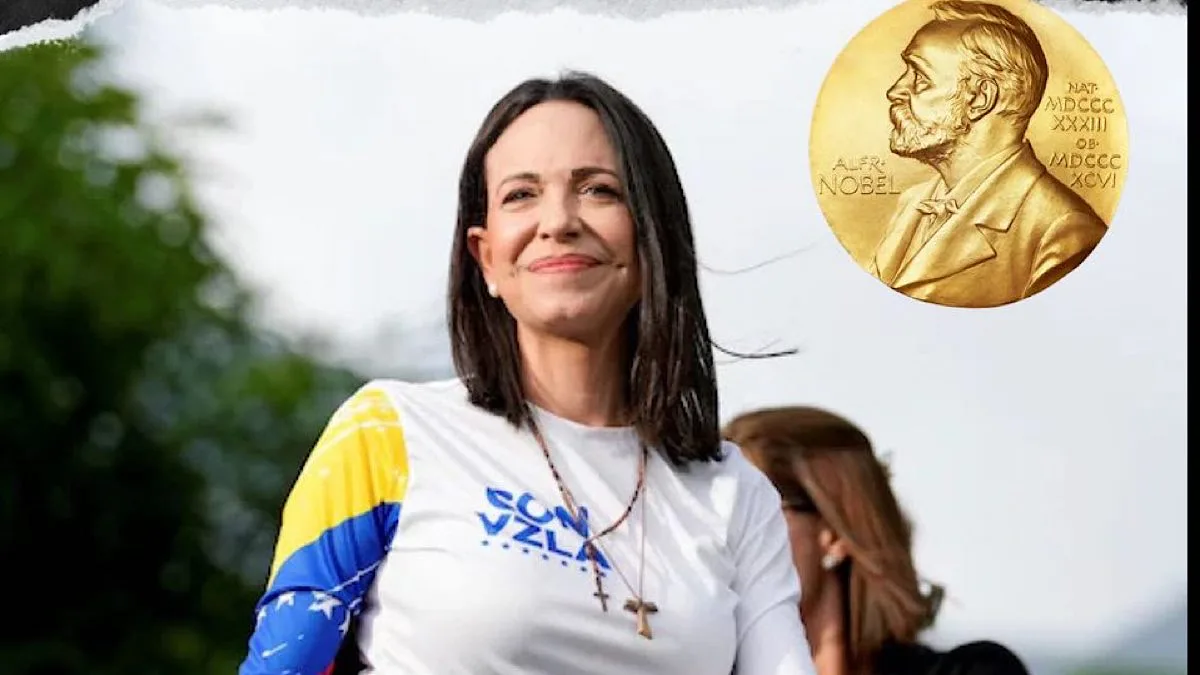
Nobel Peace Prize winner María Corina Machado’s sudden appearance in Oslo was not simply a personal triumph after months in hiding; it was a calculated political act that reopened Venezuela’s unresolved democratic question. By defying a travel ban, slipping past military checkpoints, and surfacing on the world stage under threat of arrest, she turned a tightly controlled narrative upside down. The message was unmistakable: repression may silence voices temporarily, but it cannot erase legitimacy.
Her arrival came too late for the Nobel ceremony itself, forcing her daughter to accept the prize earlier in the day. That detail matters. It underscores the abnormality of Venezuela’s political reality, where even international recognition for peaceful democratic advocacy must be mediated through exile, secrecy, and family separation. Yet when Ms Machado finally reached Oslo hours later, the symbolism only deepened. Her first public moments were not triumphalist but human – marked by tears, prayer, and the simple act of greeting supporters face to face after more than a year of isolation. What followed was equally deliberate. Sitting alongside senior representatives of the Nobel Committee, she framed Venezuela’s crisis not as a conventional dictatorship but as a system sustained by criminal economies and impunity.
Advertisement
That framing shifts the debate away from ideology and towards structure. It suggests that elections alone cannot resolve Venezuela’s paralysis unless the incentives that protect the current order are dismantled. Her insistence that the responsibility for a peaceful transition lies with those holding power was a pointed inversion of the regime’s narrative, which routinely accuses the opposition of courting violence. Equally significant was her refusal to position herself in permanent exile. She stated clearly that she intends to return to Venezuela, fully aware of the risks. In the same vein, she spoke of the Nobel Peace Prize not as a personal possession but as something she accepted on behalf of Venezuelans ~ and which she intends to take back to the country at an unspecified but appropriate time.
That phrase, carefully chosen, carries weight. It implies that the prize belongs symbolically to a future Venezuela where such an act would no longer be dangerous or subversive. This blend of restraint and defiance explains why her re-emergence unsettles the authorities more than years of louder rhetoric ever did. She is not calling for upheaval in abstract terms; she is exposing the cost of the status quo through her own lived experience ~ missed weddings, unseen graduations, years without physical contact with loved ones. That personal ledger of loss gives moral force to her political claims. Yet the risks ahead are stark.
The Venezuelan government has already branded her a fugitive and a criminal. Her international visibility may offer some protection, but it also raises the stakes. Whether this moment becomes a catalyst for negotiation or a trigger for harsher repression remains uncertain. What is no longer in doubt is that Ms Machado’s appearance in Oslo has shifted the frame. Venezuela’s crisis can no longer be reduced to a contested election or a geopolitical standoff. It now stands as a test of courage and legitimacy.